


The following article is a work-in-progress that served as the background reading for a webinar hosted by Thunderbird School of Global Management at Arizona State University on February 24. A video recording of that event can be viewed at: Metaskills Webinar URL.
The central topic, metaskills, is a pressing one for individual leaders, teams and organizations alike. As the article contends, the current treadmill of skills development programs, often based in elaborate corporate competency frameworks, is in urgent need of review and reconsideration. Rather than outright replacement, however, the argument here is that a set of metaskills – skills that enable the ongoing learning of skills – needs to be integrated with initiatives to identify and develop more ephemeral but still valuable technical skills on which leaders and organizations typically focus.
Sofian Lamali, the co-author with David Slocum, is based in Riyadh, Saudi Arabia, where he works at the intersection of strategy, people, and organization in complex businesses, partnering with boards, senior leaders, and global HR teams across geographies. He is a veteran I/O Psychologist who applies evidence-based approaches to individual and systemic growth, change & transformation, and organizational health. Sofian is recognized in the GCC region and globally as a thought and practice leader in leadership development, talent management, organizational design and development, and culture.
Continuing their research, writing, and advisory work around metaskills, Sofian and David very much invite your feedback and reactions to the article.
Metaskills are the essential skills that enable individuals and teams to enhance and build other skills. They are transferable across various domains, providing a solid basis for lifelong learning and career success. Unlike technical skills, which are often domain-specific, intended to complete given tasks, and can become obsolete over time, metaskills are enduring and essential for navigating the continually evolving challenges and opportunities of the modern workplace. Metaskills allow leaders to continually learn, evolve, and improve in the face of shifting conditions by making skill acquisition, innovation and adaptation possible.
Why this matters
Leading organizations invest considerable time and resources in identifying, classifying, measuring, and nurturing the skills essential to their success. However, in today’s world, often described as VUCA or BANI1, traditional functional skills are becoming increasingly transient in their relevance and are on the brink of being further disrupted by the widespread adoption of AI across digital and data-driven platforms.
Recent research by Australian and Chinese management scholars confirms that AI technologies are fundamentally reshaping work through automation of routine tasks while simultaneously creating demand for adaptive, human-centered capabilities (Bankins, Hu, & Yuan, 2024).2 Furthermore, recent movements of corporate skill-based initiatives often fail or under-deliver due to their complexity, as they try to address several thousands of skills, thereby confusing employees with an overwhelming menu of expectations. That complexity is only growing as AI-augmentation changes, sometimes radically, corporate understanding of how human skills relate to tasks, processes, and systems.
While organizations struggle with this complexity, researchers at Georgetown University suggest that overreliance on granular skill taxonomies may actually hinder genuine development when implemented without attention to foundational learning capacities (Oschinski, Crawford, & Wu, 2024).3 Often, what we perceive as a “technical skill” is actually the visible outcome of multiple meta-skills working together. For instance, take coding: while it appears to be a purely technical ability, strong performance in coding depends on meta-skills
such as:
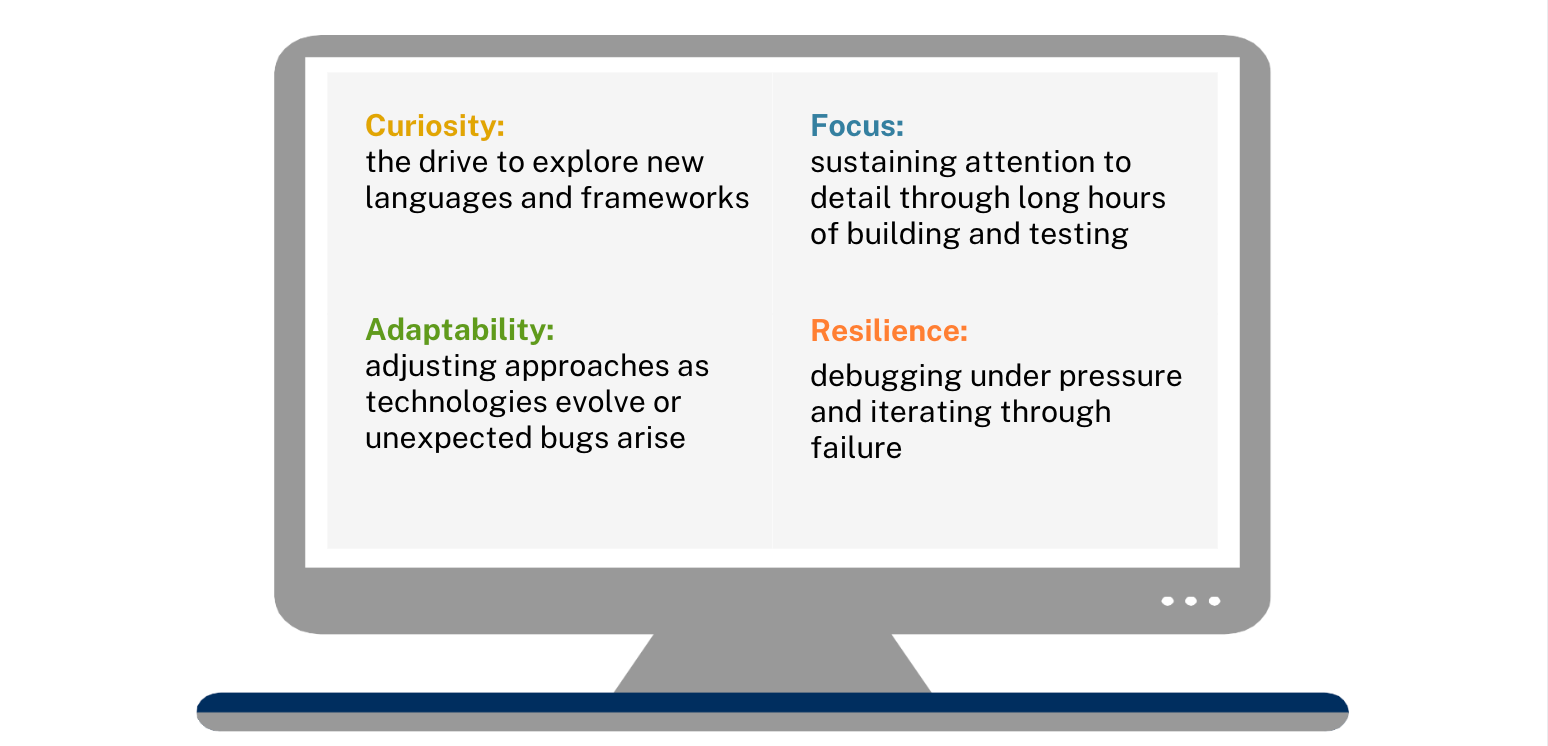
Without these underlying capabilities, the technical skill alone is brittle and difficult to sustain. This illustrates how meta-skills act as the foundation and multiplier that give depth, flexibility, and long-term value to technical expertise. The relationship between technical competencies and underlying adaptive capacities reflects broader patterns in how AI reshapes skill requirements, with growing evidence that AI literacy must be coupled with metacognitive and interpersonal capabilities to yield sustainable performance (Bankins, et al., 2024).
The key question for organizations and leaders is: how can they invest in skills in a manageable way and ensure a sustainable return on that investment? According to researchers at the University of Wollongong, AI-driven leadership suggests the answer lies in cultivating higher-order capabilities that enable workforce adaptation across diverse and evolving contexts (Hossain, Fernando, & Akter, 2025).4 We believe these universal, highly transferable skills – which enable the development of other skills – warrant priority investment. To truly be considered meta-skills, these abilities must play a crucial role in developing other skills, much as core competencies in corporate strategy serve as foundational capabilities enabling integration and coordination of other organizational capabilities. Evidence indicates that while technical skills face rapid obsolescence as AI capabilities expand, adaptive and metacognitive capacities remain essential throughout professional careers (Bankins, et al., 2024).
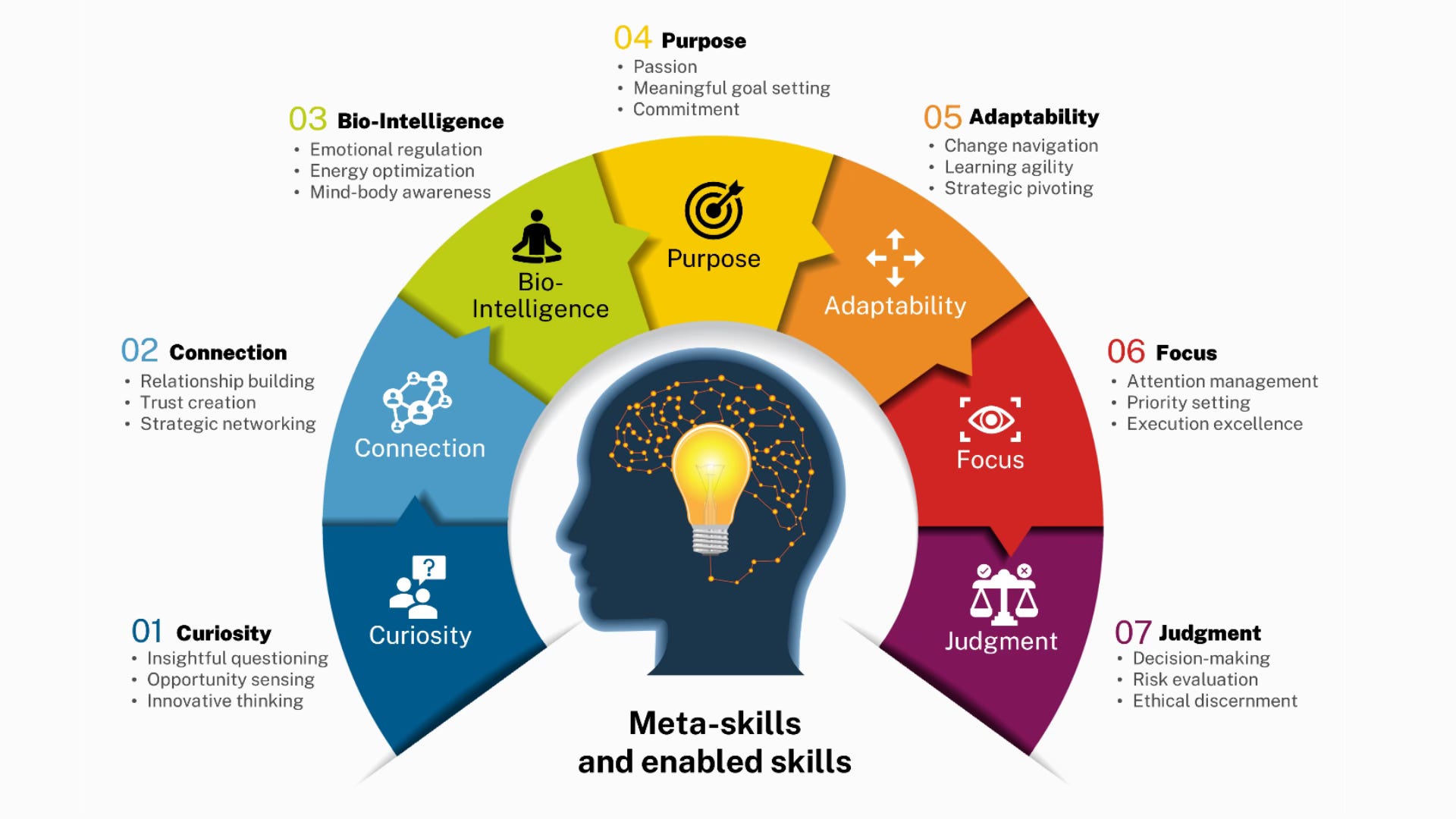
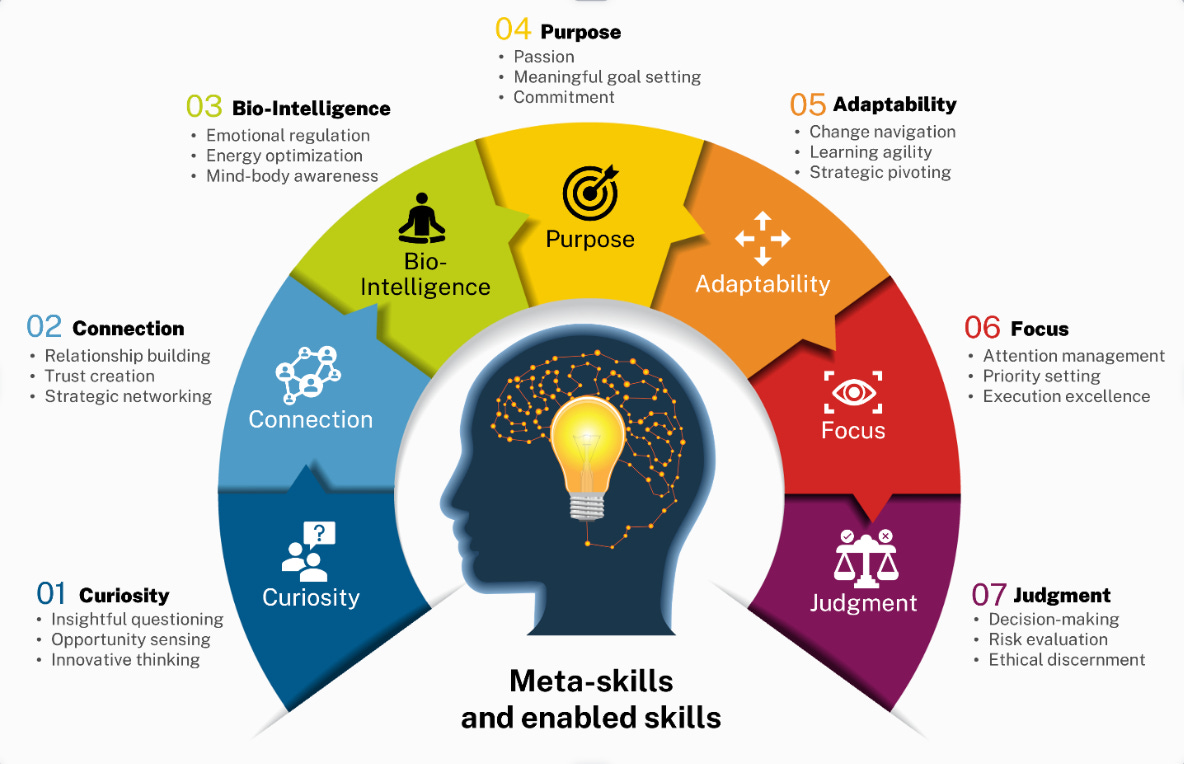
This overview will focus on seven critical metaskills — curiosity, connection, bio intelligence, purpose, adaptability, focus, and judgment — exploring their importance and offering insights into how executives can develop them.

01 Curiosity
Curiosity: The drive to explore, question, and seek new knowledge and perspectives. Curiosity fuels learning, creativity, and innovation by prompting leaders to ask “why?”, “what if?”, and “what else?” rather than accepting things as they are.
Curiosity is essential because it prompts leaders to seek out new information, question assumptions, and stoke their and their team’s imagination. In doing so, curiosity drives and sustains the dialogue with others at the heart of critical thinking (and, even, optimal interactions with AI models). Executives who remain curious are more likely to explore fresh opportunities, discover innovative solutions, and avoid stagnation.
Leaders can cultivate curiosity by embracing a mindset of ongoing inquiry and asking better questions. Regularly questioning assumptions, seeking out new perspectives, and exploring areas beyond one’s expertise to solve problems [creatively] and find new opportunities. Executives should also encourage curiosity in their teams, supporting a culture of growth and learning where questioning and experimentation are valued.
02 Connection
Connection: The ability to create meaningful and trusting relationships and to understand how seemingly disparate ideas, people, or systems interrelate. Connection across contexts and networks deepens communication and listening, fosters collaboration, and helps leaders navigate organizational complexity by seeing the bigger picture. Connection is vital for executives, whether they are managing diverse teams or working in complex organizations or building coalitions and partnerships across sectors and communities. Understanding how systems and people are interconnected and building relationships accordingly allows leaders to break down silos and foster collaboration. This is vital at a time when increasing AI adoption heightens the anxiety of human employees.
To improve connection, leaders should actively seek out opportunities to engage with multiple perspectives, both within and outside the organization, and build diverse networks. Executives should also practice systems thinking to better understand the relationships between different people, separate parts of their organizations, and the wider contexts in which their enterprises operate.
03 Bio-Intelligence
Bio-Intelligence: Understanding and working in harmony with human nature – both biological and psychological. Bio-intelligence involves recognizing the rhythms and capacities of oneself and others, using and regulating emotional and physical energy efficiently, and promoting well-being.
Bio-intelligence has become increasingly important as leaders recognize that peak performance is tied to well-being – psychological, emotional, physical, and spiritual. Executives who understand their own biological rhythms and those of their teams can create healthier, more sustainable and successful work environments.
Leaders can develop bio-intelligence by enhancing self-awareness and becoming attuned to their own energy levels and emotional states and listening to their bodies. Practices like mindfulness, regular physical activity, and managing life-work integration can all contribute to higher levels of bio-intelligence and resilience.
04 Purpose
Purpose: The ability to create or find meaning and align personal and organizational actions with larger shared goals and meanings. Leaders who cultivate purpose inspire and motivate others, continually coordinating their individual and collective efforts.
Purpose is a critical metaskill that draws on and extends both personal values and organizational priorities. Leaders with a clear sense of purpose inspire loyalty and drive engagement, even in difficult times. Purpose can also act as a compass for individuals and teams during moments of uncertainty. Executives can clarify their sense of purpose by consistently reflecting on their own core values and beliefs and making shared meanings with others. Regularly revisiting the “why?” behind their work and organizations’ priorities, and then consistently communicating this purpose can inspire and fuel others to perform and create feedback loops to refine the work being accomplished together.
05 Adaptability
Adaptability: The capacity to change, pivot, and thrive in new conditions and with different people. Adaptability is crucial for navigating a world where technological, social, and market shifts occur with increasingfrequency and, as with AI, leaders are called upon to determine ways forward and galvanize others’ action to get there.
Adaptability, long considered essential for leaders, has only grown in importance. Executives today must respond rapidly in response to external shocks, whether those are market disruptions, technological advances, or unexpected crises. As well, leaders must embrace ongoing internal tensions and dissonances in their roles and relationships.
Current research on leadership in specifically AI-driven organizations identifies such adaptive capability – the capacity to grasp consequences of technological deployment and pivot strategies accordingly – as among today’s most critical competencies for navigating algorithmic transformation (Hossain, et al., 2025).
Leaders should regularly seek out new people and experiences and accept changes that challenge them to adapt and grow. Developing greater Emotional Intelligence, which fosters better management of one’s own emotions and deeper empathy for others, is a crucial contributor to effective adaptation. Taking on unfamiliar roles, learning new skills, or leading projects in volatile environments can help develop adaptability over time.
06 Focus
Focus: The ability to concentrate on what truly matters amidst distractions. Focus enables leaders to make sense of changing contexts and determine what matters and to prioritize effectively, channeling energy and resources toward major decisions, key initiatives, and long-term goals.
Focus is the metaskill that keeps executives on track in a world full of noise, distractions, and AI slop. Leaders who can maintain focus are able to prioritize the most critical initiatives, guiding their teams toward long-term goals even when faced with competing short-term demands.
To improve focus, executives should regularly step back, and identify and review their greatest priorities across the domains of their lives. Such reflection and prioritization require minimizing distractions, creating systems for managing competing demands effectively, and prioritizing opportunities for renewal. Coaching and mentoring can also support the development of this practice.
07 Judgment
Judgment: The capacity to engage in critical thinking and deliberate sense-making and decision-making by balancing facts, intuition, experience, and ethical considerations. Judgment enables leaders to make sound choices in uncertain and ambiguous situations, avoiding reactive or short-sighted actions, and engage in effective problem-solving.
Judgment is the foundation of effective decision-making and the sense-making that these decisions are based upon. In environments characterized by uncertainty, leaders need to weigh various factors, including data, intuition, personal experience, and ethical considerations. Good judgment is what allows executives to navigate ambiguity and avoid biases and decision-making traps.
Leaders develop good judgment from varied experience, deliberate reflection on their decisions, and seeking feedback to identify areas for improvement. Over time, this reflective practice strengthens judgment, decision-making, and problem-solving capabilities. A consistent reflective practice also allows for the development of human judgment capable of transforming data into foresight by synthesizing creative intuition beyond the pattern recognition and trend extrapolation of AI.
So, what does this mean for talent strategies?
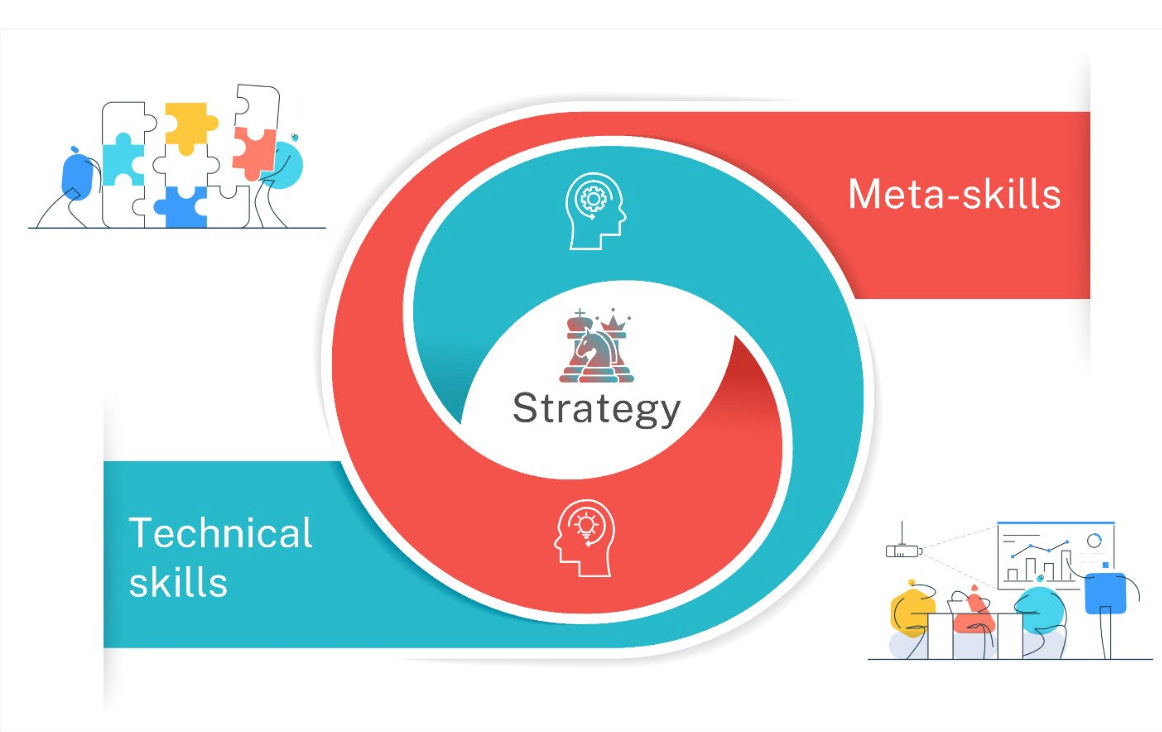
It’s time for educators and organizations to reframe their approach. Today, too much emphasis is placed on technical skills – including the integration of AI models into learning and development – while swinging entirely to the other extreme, focusing only on meta-skills, is equally risky. The real challenge – and opportunity – lies in finding the balance point between the two.
The Georgetown research on workforce development in the AI era confirms this tension, finding that while AI tools can enhance training efficiency, implementation must carefully balance technological capability with genuine skill development to avoid undermining learning outcomes (Oschinski, et al., 2024).
Technical skills help organizations exploit current opportunities and deliver on today’s priorities. But leftunchecked, and as AI rapidly expands into this space, they quickly become obsolete,locking companies into costly and reactive cycles of reskilling5. Meta-skills, onthe other hand, enable organizations to be ambidextrous by unlocking exploration:they fuel adaptive strategies, future readiness and sustainable competitive advantage. Yet relying on them alone risks weakening day-to-day performance and competitiveness.
The imperative, then, is not choosing one over the other but reconciling both ends of this polarity. By weaving technical skills and metaskills into a coherent strategy, organizations can develop leaders and build a workforce that are both agile in the present and resilient for the future. Striking this balance is not just a design choice, it is the essence of adaptive leadership.
In our era of rapid change, leaders can no longer rely on static knowledge, fixed strategies, or a given set of technical skills. A Canadian-American research team, led by scholars at York University in Toronto, that examined leadership of AI transformation in a healthcare organizations, confirms that navigating technological disruption requires individuals to develop not just technical capacity but adaptive capacity to respond to contextual changes and interpersonal capacity tomanage the human dimensions of transformation (Abbasiyannejad, et al., 2024).6
Metaskills are critical because they enable executives to cultivate these adaptive and interpersonal capacities, fostering continuous learning, thoughtful action, andversatility in the face of uncertainty and complexity. These metaskills serve as a foundation upon which other skills can be built, across the uncertainty and complexity of ongoing change, thereby enabling leaders to learn continuously and adapt to new challenges and opportunities.
References
1VUCA: Volatile, Uncertain, Complex, Ambiguous. BANI: Brittle, Anxious, Non-Linear,Incomprehensible.
2Bankins, S., Hu, X., & Yuan, Y. (2024). Artificial intelligence, workers, and future of work skills. Current Opinion in Psychology, 58, 101828. https://doi.org/10.1016/j.copsyc.2024.101828.
3Oschinski, M., Crawford, A., & Wu, M. (2024). AI and the Future of Workforce Training. Center for Security and Emerging Technology. December 2024. https://doi.org/10.51593/20240033.
4Hossain, S., Fernando, M., & Akter, S. (2025). The influence of artificial intelligence-driven capabilities on responsible leadership: A future research agenda. Journal of Management & Organization, 31(5), 2360–2384. Advance online publication June 13, 2025. https://doi.org/10.1017/jmo.2025.10010.
5World Economic Forum (2025), The Future of Jobs Report 2025, World Economic Forum, Geneva. According to the report, employers on average expect that 39 % of workers’ core skills will be transformed or become outdated by 2030.
6Sriharan A., Sekercioglu N., Mitchell C., Senkaiahliyan S., Hertelendy A., Porter T., Banaszak-Holl J. (2024). Leadership for AI Transformation in Health Care Organization: Scoping Review. Journal of Medical Internet Research. 2024; 26: e54556. https://doi.org/10.2196/54556.